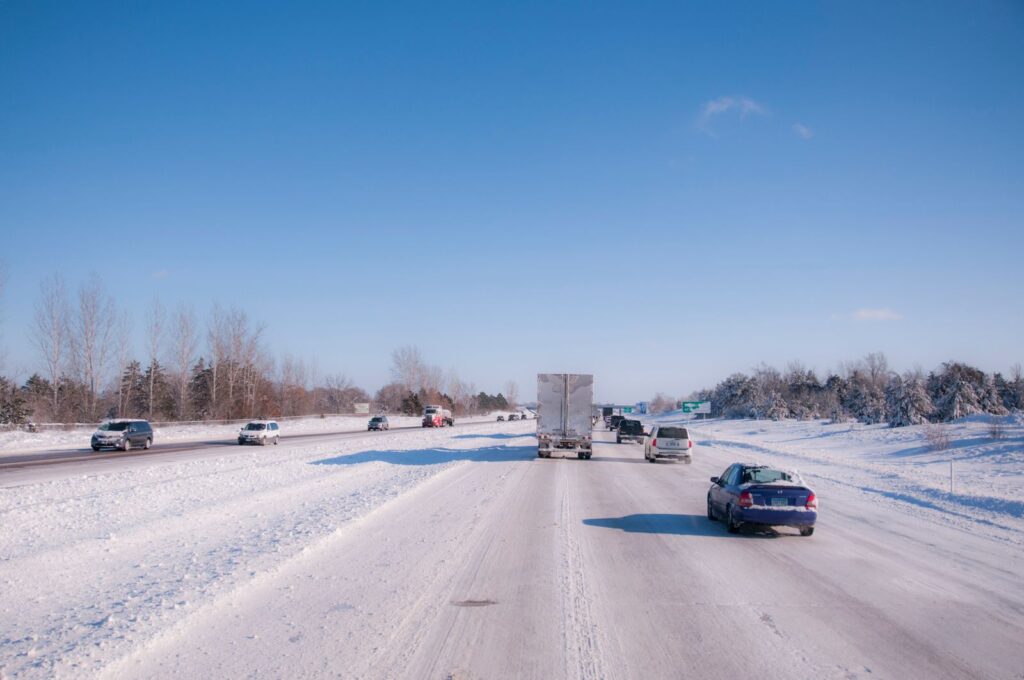
Winter driving in Montana can mean black ice on a valley highway in the morning, blowing snow across the plains by afternoon, and a mountain pass closed by evening. For newcomers and visitors, it is one of the biggest adjustments to life in the state. For longtime residents, it is a season-long exercise in preparation and judgment. This guide covers how to check road conditions, how to prepare your vehicle, and the habits that keep drivers safer on Montana’s winter roads.
Why Montana Winter Roads Are Challenging
Several factors combine to make winter travel in Montana demanding:
- Long distances between towns, with limited services and cell coverage on some routes.
- Mountain passes where snow falls heavily and conditions change quickly with elevation.
- Wind on the plains, which causes ground blizzards and drifting even on clear days.
- Black ice, a thin, nearly invisible layer of ice common on bridges, overpasses, and shaded curves.
- Wildlife on the road, particularly deer and elk near dawn and dusk.
Check Conditions Before Every Trip
The Montana Department of Transportation (MDT) provides traveler information on road conditions, closures, and road cameras through its 511 service and website. Checking before you leave, and again before crossing a pass, is the single most useful habit for winter travel. The National Weather Service’s forecasts and winter weather warnings are also worth checking for any trip beyond town.
If conditions look poor, the safest decision is often to wait. Many winter crashes happen to drivers who were in a hurry to beat a storm.
Prepare Your Vehicle
Tires
Tires matter more than anything else on snow and ice. Dedicated winter tires, marked with the mountain and snowflake symbol, stay softer in the cold and grip far better than all-season tires. Some Montana drivers use studded tires; state law sets the dates when studded tires may be used, so check the current rules with MDT before installing them. Check tire pressure often, since it drops in cold weather.
Four-wheel and all-wheel drive
Four-wheel drive and all-wheel drive help a vehicle get moving and climb in snow, but they do not help it stop or turn on ice. Drivers of these vehicles should keep the same safe speeds and following distances as everyone else.
Basic maintenance
- Keep the battery in good condition, since cold weather weakens it.
- Use winter windshield washer fluid and replace worn wiper blades.
- Keep the fuel tank at least half full to reduce the risk of fuel line freeze and to give you a reserve if you are stranded.
- Consider a block heater for extremely cold mornings.
Pack a Winter Emergency Kit
Being stranded on a remote road in winter is a real risk in Montana. A basic kit should include:
- Warm blankets or a sleeping bag, plus hats, gloves, and extra layers
- Water and high-energy snacks
- A flashlight with spare batteries
- An ice scraper and snow brush
- A small shovel
- Sand, cat litter, or traction mats
- Jumper cables
- A first aid kit
- A phone charger that works in the car
- Tire chains if you travel mountain passes, and practice installing them before you need them
Driving Habits That Keep You Safer
- Slow down. Posted limits are set for ideal conditions. Drive to the conditions instead.
- Increase following distance. Stopping distances on snow and ice can be several times longer than on dry pavement.
- Brake, accelerate, and steer gently. Sudden inputs cause skids.
- Watch for black ice on bridges, overpasses, and shaded areas, especially near freezing temperatures.
- Do not use cruise control on slick roads.
- Give snowplows plenty of room. Stay well behind them and do not pass on the right.
- Turn on your headlights in snow and low light so others can see you.
- Tell someone your route and expected arrival time on longer trips.
If You Start to Skid
Stay calm, ease off the accelerator, and steer gently in the direction you want the front of the vehicle to go. Avoid slamming the brakes. If your vehicle has anti-lock brakes, press firmly and steadily and let the system work rather than pumping the pedal.
If You Get Stranded
- Stay with your vehicle unless help is clearly close by. A vehicle is easier for rescuers to find and provides shelter.
- Call for help if you have service, and give your location as precisely as you can.
- Run the engine sparingly for heat, and keep the exhaust pipe clear of snow to prevent carbon monoxide buildup.
- Make yourself visible with hazard lights or a bright cloth tied to the antenna or door.
- Stay warm and hydrated using the supplies in your kit.
Watch for Wildlife
Deer, elk, pronghorn, and moose often move to lower ground and roadsides in winter, where snow is shallower and plowed roads are easier to travel. Collisions are most common around dawn and dusk. Scan the shoulders, slow down where wildlife crossing signs are posted, and remember that where one animal crosses, others often follow. Swerving sharply on an icy road can be more dangerous than braking firmly in a straight line.
Know When Not to Go
Montana’s weather can outpace even the best preparation. Road closures, blizzard warnings, and whiteout conditions are signals to delay travel. Schools, employers, and businesses across the state understand winter delays, and waiting a few hours for plows and daylight is almost always the better choice.
The Bottom Line
Safe winter driving in Montana comes down to preparation and patience: check MDT’s road information before you go, equip your vehicle with good winter tires and an emergency kit, drive slower than you think you need to, and be willing to stay home when the weather turns. Those habits will carry you through a Montana winter far more reliably than any vehicle feature.