Three of Yellowstone National Park’s five entrances sit in Montana, and the small towns outside them shape how millions of visitors experience the park. Each gateway has its own character, its own season, and its own access to a different part of Yellowstone. Choosing the right base can mean the difference between spending hours in the car and waking up a few minutes from the geysers or the wolves of the Lamar Valley. This guide compares Montana’s Yellowstone gateway towns and explains what visitors should know about entrance dates and fees for the 2026 season.
Yellowstone’s Montana Entrances at a Glance
| Gateway town | Park entrance | 2026 season | Best for |
|---|---|---|---|
| West Yellowstone | West Entrance | April 17 to October 31, 2026 for regular vehicles | Old Faithful and the geyser basins |
| Gardiner | North Entrance | Open year-round, weather permitting | Mammoth Hot Springs, winter visits |
| Cooke City and Silver Gate | Northeast Entrance | Reached year-round from Gardiner, weather permitting | Lamar Valley wildlife watching |
| Red Lodge | Via the Beartooth Highway to the Northeast Entrance | Beartooth Highway typically late May to mid-October | Scenic driving |
All dates come from the National Park Service and are subject to change because of weather and road conditions.
West Yellowstone: The Busiest Gateway
West Yellowstone sits right at the park’s West Entrance and is the closest Montana town to the park’s famous geyser basins, including Old Faithful. For 2026, the National Park Service lists the West Entrance as open to regular vehicle traffic from April 17 through October 31.
The town is built around visitors, with a large supply of motels, cabins, campgrounds, restaurants, and outfitters. That convenience comes with crowds in peak summer, when lines at the entrance station can be long in the morning. Visitors who want to see the geyser basins before the midday rush often start early from West Yellowstone.
In winter, when the park’s interior roads close to regular cars, West Yellowstone becomes a base for guided snowcoach and snowmobile tours into the park, as well as cross-country skiing in the surrounding national forest.
Gardiner: The Year-Round Entrance
Gardiner, on the Yellowstone River north of the park, is home to the North Entrance and the landmark Roosevelt Arch. It is the only entrance where the road into the park stays open to regular vehicles all year. The National Park Service notes that the road from the North Entrance through Mammoth Hot Springs to the Northeast Entrance and Cooke City is typically open to regular traffic year-round, weather permitting.
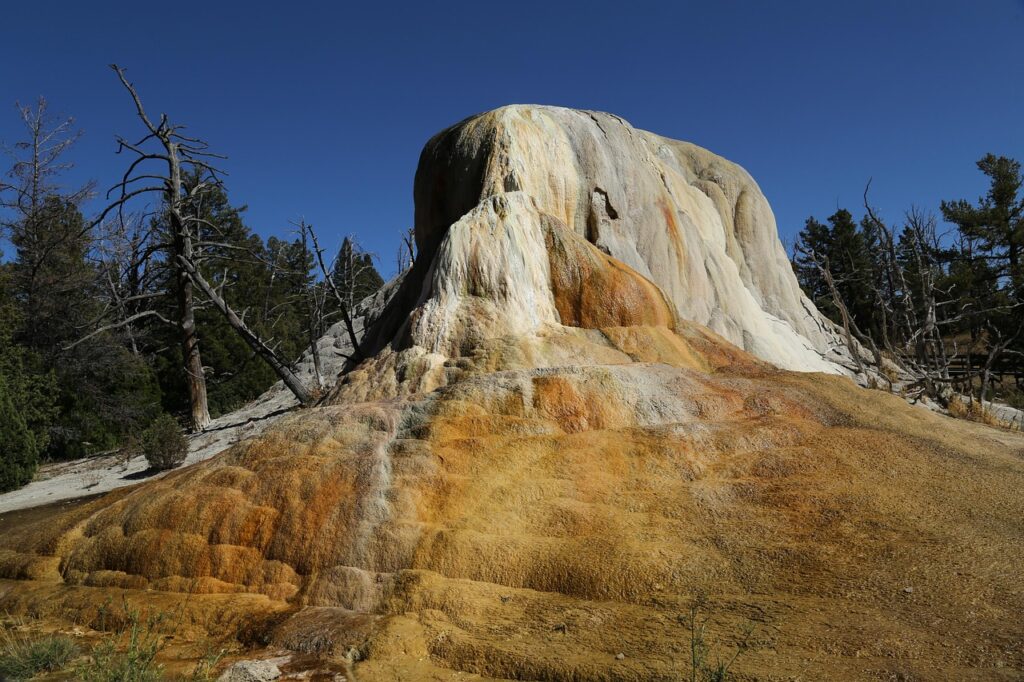
That makes Gardiner the natural base for winter visitors who want to drive into the park themselves. Mammoth Hot Springs, with its terraced travertine formations, is a short drive inside the entrance. The town is smaller and quieter than West Yellowstone, with lodging, restaurants, and river rafting outfitters that operate in summer.
Cooke City and Silver Gate: The Quiet Northeast Corner
The twin communities of Cooke City and Silver Gate sit just outside the Northeast Entrance, surrounded by mountains in a remote corner of the state. They are the closest towns to the Lamar Valley, often called one of the best places in the lower 48 states to watch wildlife such as bison, elk, and wolves, particularly around dawn and dusk.
Lodging and services are limited, and the area is far from larger towns, so visitors should plan fuel, groceries, and reservations ahead. In winter, Cooke City is reachable by car only through the park from Gardiner, since the Beartooth Highway to the east closes for the season.
Red Lodge and the Beartooth Highway
Red Lodge is not directly on a park boundary, but it is the starting point for the Beartooth Highway (U.S. 212), a high-elevation route that climbs through the Beartooth Mountains to Cooke City and the Northeast Entrance. The National Park Service lists the highway as open from the Friday of Memorial Day weekend to mid-October, conditions permitting.
The drive itself is the attraction, with alpine lakes, switchbacks, and wide views. Red Lodge offers a historic downtown, lodging, and restaurants, and makes a good first or last stop for travelers combining Yellowstone with a scenic road trip. Anyone planning the route early or late in the season should check road status before setting out, since snow can close high sections even when the highway is officially in season.
2026 Entrance Fees
According to the National Park Service, Yellowstone’s entrance fees for 2026 are:
- Private vehicle: $35 for seven consecutive days, covering the vehicle and all passengers.
- Motorcycle: $30 for seven days.
- Individual on foot or bicycle: $20 for visitors 16 and older.
- Yellowstone annual pass: $70.
The park also lists a separate $100 per person fee for non-U.S. residents aged 16 and older, in addition to the standard entrance fee, unless they hold an annual pass or an America the Beautiful pass. International visitors should factor that into their budgets. The Park Service also lists several fee-free days during 2026, including Memorial Day, the Independence Day weekend, and Veterans Day.
Choosing a Base
- First-time visitors focused on geysers will usually find West Yellowstone the most convenient.
- Wildlife watchers tend to favor Gardiner or Cooke City and Silver Gate for access to the northern range and the Lamar Valley.
- Winter visitors driving their own vehicle should base themselves in Gardiner.
- Road trippers can link Red Lodge, the Beartooth Highway, and Cooke City into a scenic loop in summer.
Planning Tips
- Book lodging early for summer, especially in the smaller gateways where options are limited.
- Check road status daily through the National Park Service, since spring and fall storms can close roads with little notice.
- Fill up on fuel before entering the park and before driving remote stretches like the Beartooth Highway.
- Give wildlife space. Bison and elk are large, fast, and unpredictable, and the park sets minimum viewing distances.
- Expect limited cell service inside the park and in the northeast corner, and download maps before you go.
The Bottom Line
Montana’s Yellowstone gateway towns each open a different door into the park. West Yellowstone puts visitors closest to the geysers, Gardiner offers the only year-round road access, Cooke City and Silver Gate sit on the doorstep of the Lamar Valley, and Red Lodge anchors one of the most dramatic drives in the country. Matching the town to the season and to what you most want to see is the simplest way to get more out of a Yellowstone trip.